
She Tried to Block Her Boarding… Then Learned Who She Really Was

She Denied Boarding to a Passenger—Then Discovered She Owned the Aircraft
At a private air terminal, where precision and professionalism are critical, every interaction matters. In such high-responsibility environments, decisions must be made quickly—but also carefully. One recent incident at a boarding gate became a powerful reminder of why verification and respectful communication should always come first.
The situation began as a private jet prepared for departure. The crew was ready, the ground team was in position, and passengers were expected to board without delay. Everything appeared routine—until one unexpected exchange changed the tone completely.
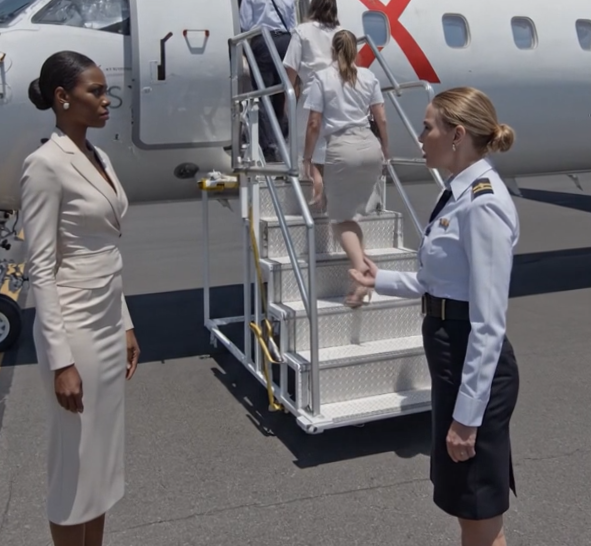
A woman approached the aircraft calmly, walking toward the boarding stairs. Before she could continue, she was stopped by a staff member standing guard near the entrance.
“Stop,” the staff member said firmly. “You are not boarding this aircraft. This flight is private. Passengers are pre-approved only.”
The woman paused but remained composed. She didn’t react emotionally or raise her voice. Instead, she responded with quiet confidence.
“I am aware,” she said. “My name is on the passenger list. You can verify it.”
Rather than checking again, the staff member seemed certain in her judgment.
“I know exactly who is on this list,” she replied. “And you are not one of them. Do not try to force your way onto this jet.”
The exchange began to draw attention. In a professional setting like private aviation, even a brief disagreement can quickly escalate if not handled carefully. While safety procedures are essential, so is the ability to reassess and confirm details before making firm conclusions.
The passenger remained calm.
“You are making assumptions,” she said. “This flight is authorized under my name. You should double-check.”
Despite this, the staff member escalated the situation.
“Security will escort you away,” she stated. “You are not getting on this plane. Step back immediately.”
At this point, the tension was visible to others nearby. What could have been resolved in seconds with a simple verification was becoming a public misunderstanding.
The passenger, still composed, gave one final response.
“Before you call anyone,” she said, “check the ownership, the registration, and who authorized this flight.”
Those words shifted the situation immediately.
Within moments, the relevant records were reviewed. The aircraft registration was confirmed. The authorization details were checked carefully. The truth quickly became clear.
The woman standing at the gate was not an unauthorized passenger. She was the owner of the aircraft—and the person under whose company the flight was operating.
The atmosphere changed instantly.
“I own this aircraft,” she said calmly. “This flight operates under my company, and you just denied boarding to your employer.”
The realization brought a sudden silence. The staff member had acted quickly, believing she was protecting the flight—but without verifying the facts. The confidence that had driven the situation now highlighted the importance of careful procedure.
In aviation, safety is always the top priority. Staff are trained to act decisively, especially in restricted areas. However, professionalism also requires balance—acting with both confidence and accuracy. Verification systems exist for a reason, and using them properly can prevent unnecessary conflict.
This moment served as a valuable lesson not only for those present but for anyone working in fast-paced environments. Assumptions, even when made with good intentions, can lead to avoidable mistakes. Respectful communication and fact-checking are essential parts of any professional role.
It also highlighted the importance of composure. The passenger did not escalate the situation or respond negatively. Instead, she remained calm, repeated the facts, and allowed the truth to resolve the issue.
In the end, the situation was not just about boarding a flight. It was about workplace standards, communication, and the importance of treating every individual with respect—regardless of assumptions.
The takeaway is clear: verify first, assume less, and approach every interaction with professionalism. In environments where decisions matter, a few extra seconds of careful confirmation can make all the difference.